There’s been quite a bit of work happening on Radiant this month. Some of it has been visual, some of it has been about developing the underlying game systems, and some has been about thinking through how people might first encounter the world and discover what they want to do in it.
A few of these projects connect to things I’ve been thinking about for a while. How do we help people imagine the characters they could play? How do we make the different factions and organizations of Phoibos feel like parts of a coherent world? And how do we bring together the different scales and styles of gameplay that have inspired Radiant in the first place?
Here are some of the things I’ve been working on.
1. Helping Players Imagine Who They Could Be
One thing I’ve been thinking about is how the visual presentation of characters can actually inspire people to play.
It’s one thing to give someone a list of character classes, units, and abilities. It’s another to help them imagine what sort of person they could be in the world, what they might look like, and what sort of story they could invest themselves in.
I took a bit of inspiration from an unexpected direction here: fashion magazines.
Fashion magazines have spent a long time figuring out how to use clothing, photography, and page layouts to help people imagine themselves as different sorts of people — they create little windows into different identities and ways of life.
I started looking at how we might borrow some of those ideas for Radiant.
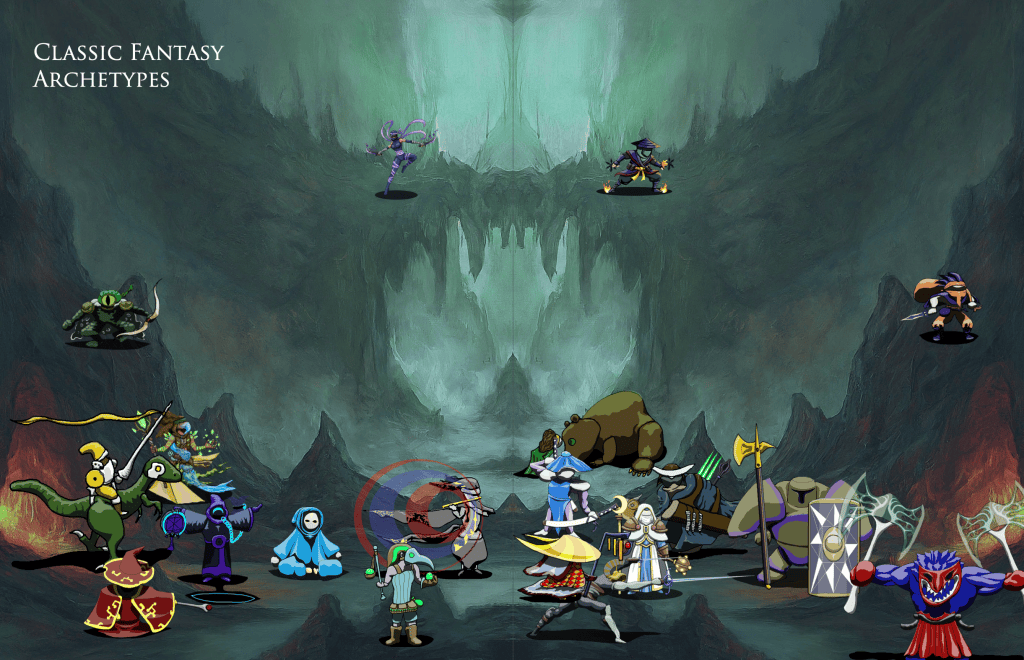
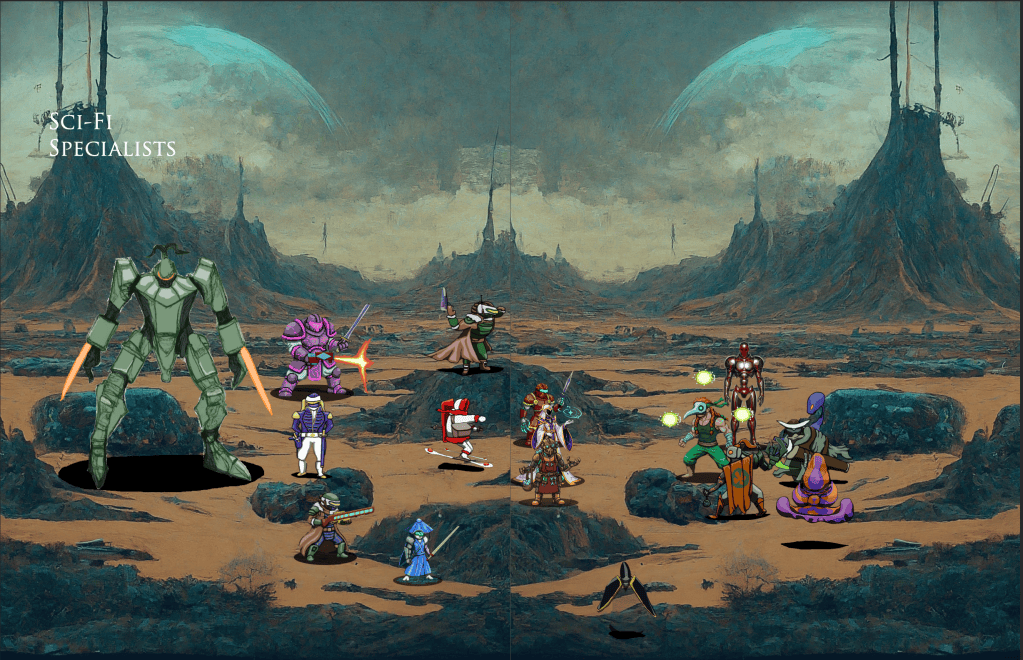
One direction is larger spreads showcasing playable classes in their natural environments. I’ve been experimenting with layouts for things like Sci-Fi Specialist and Classic Fantasy, where you get a sense of several different characters and the worlds they inhabit.
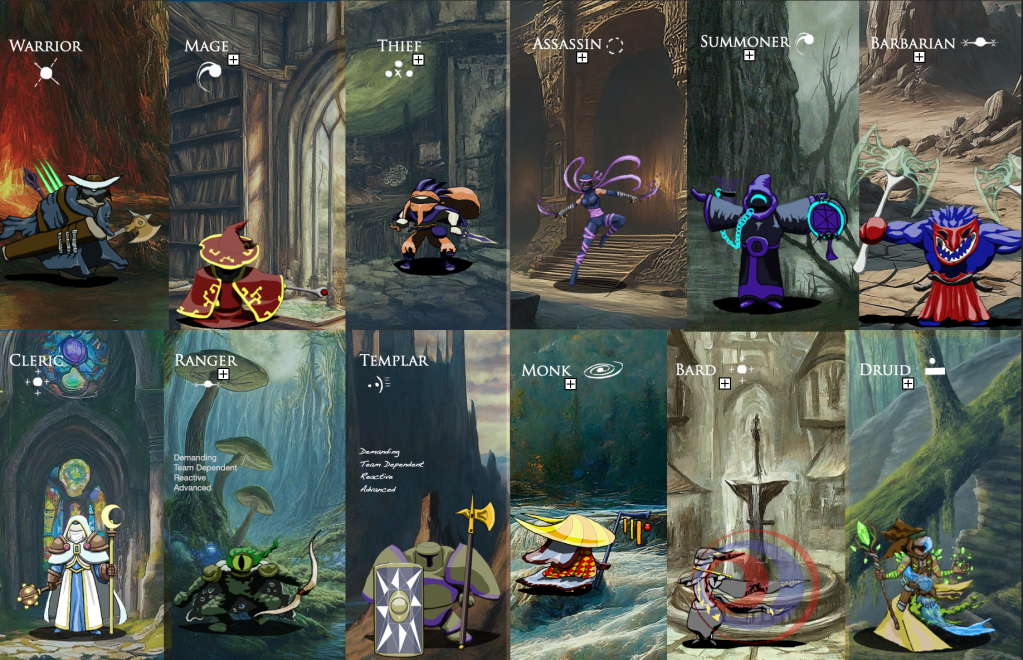
But some of my favorites are the six-character layouts. These arrange classic archetypes like the warrior, mage, and thief in a series of smaller panels, with relatively little text. You can just look at them, see the characters in their environments, and get that little spark of inspiration: Oh yeah, that’s cool. I want to learn more about that.
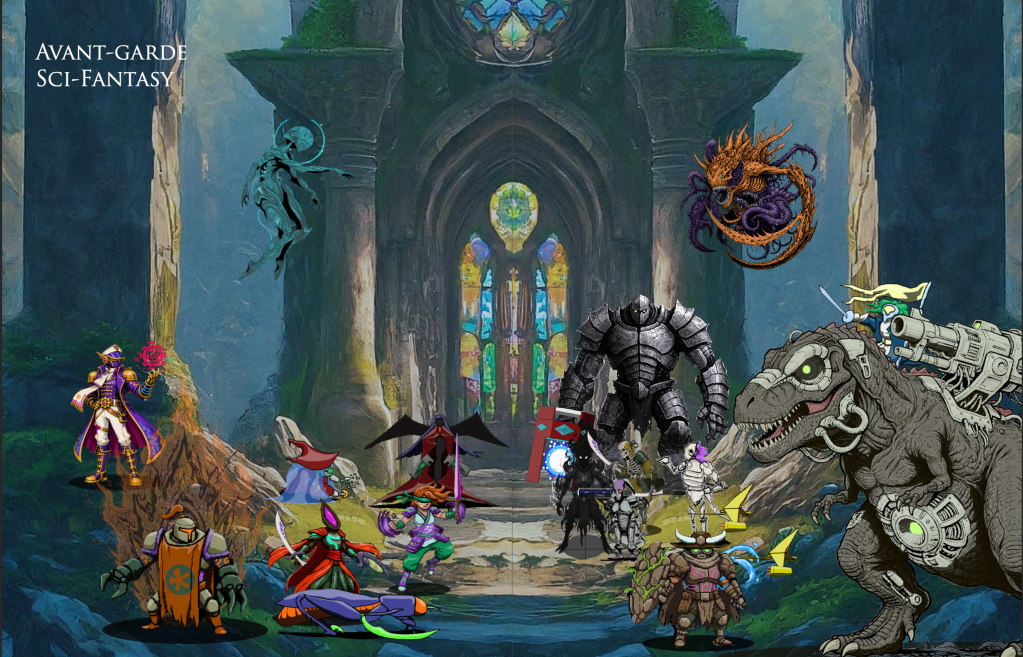
That’s really what I’m after. I’d like people interested in Radiant to be able to browse what they could play, find something that catches their imagination, and then have a natural path toward some particularly good first-experience cards, characters, or other assets.
One of the interesting things about Radiant is that it supports several different styles of play. You can approach it as a wargame, as a D&D-style adventure experience, or as something more reminiscent of Final Fantasy Tactics. Ideally, the characters that inspire you should be useful across all of those modes.
So the idea is to help people find something they want to be, then give them an easy way to start playing it.
Exploring equipment, organizations, and the world
I’ve also been experimenting with some other ways of presenting the possibilities.
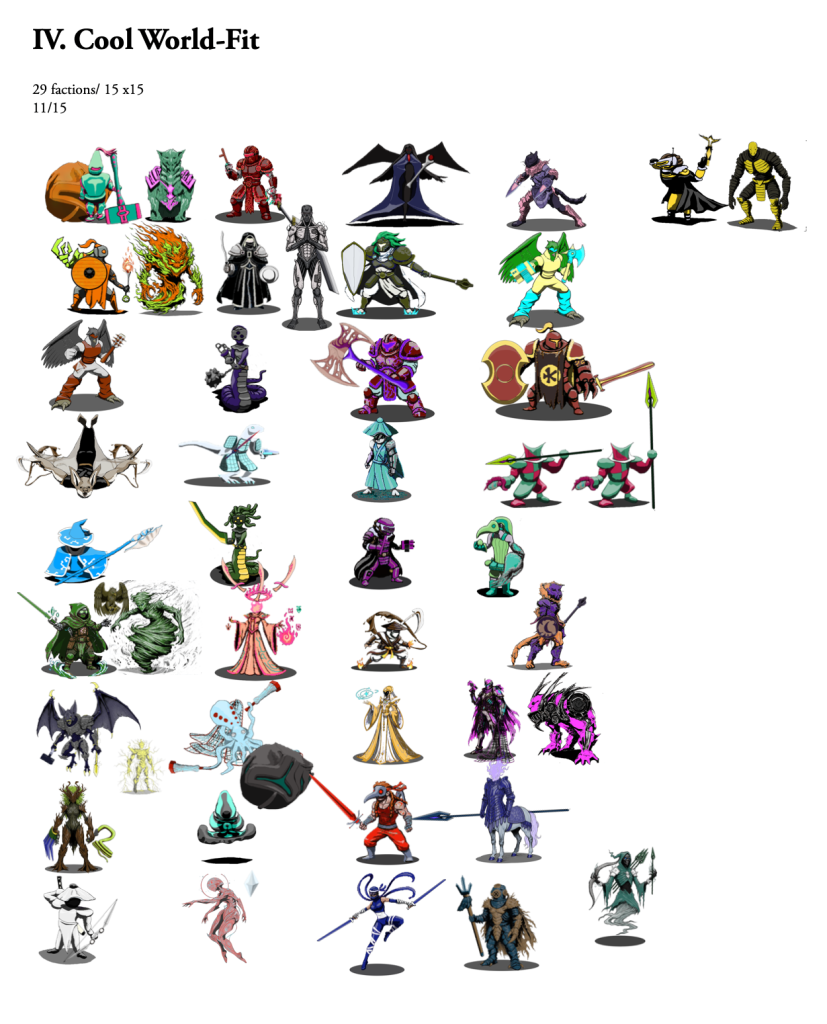
One set of layouts builds on some earlier work around faction colors and heraldry. Here, I’m playing around with how different classes might look within the visual language of Phoibos, including the color schemes associated with the various gods, churches, and organizations.
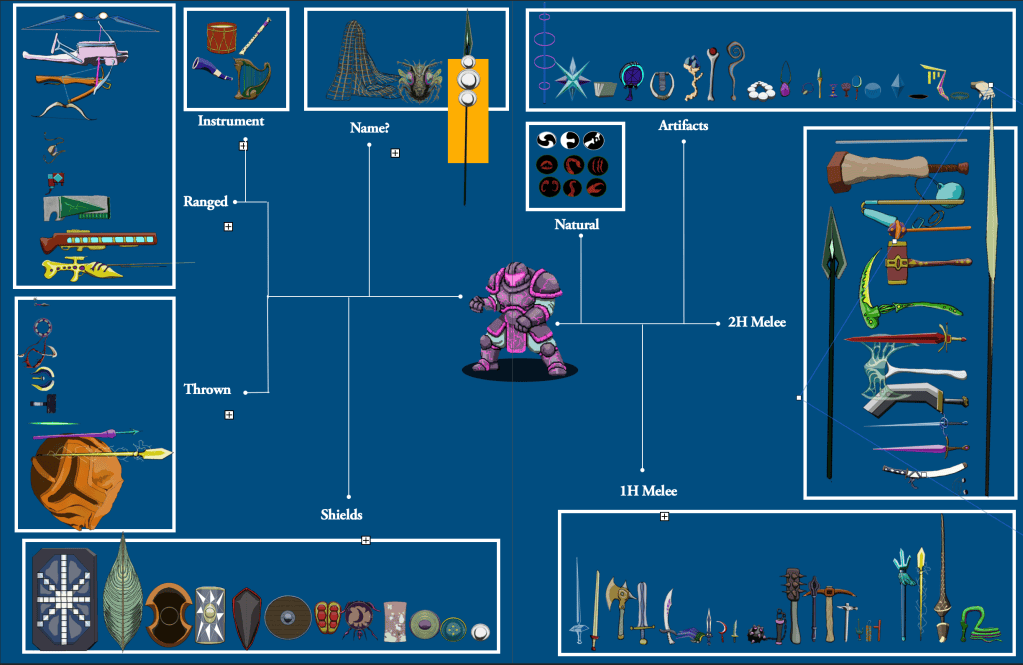
Another presentation takes a bit of inspiration from classic video game equipment screens. You’ve got the different equipment slots laid out, giving you a sense of the weapons, armor, and other options available to a character. I like the idea of showing people just how much room there is to customize what they’re playing.
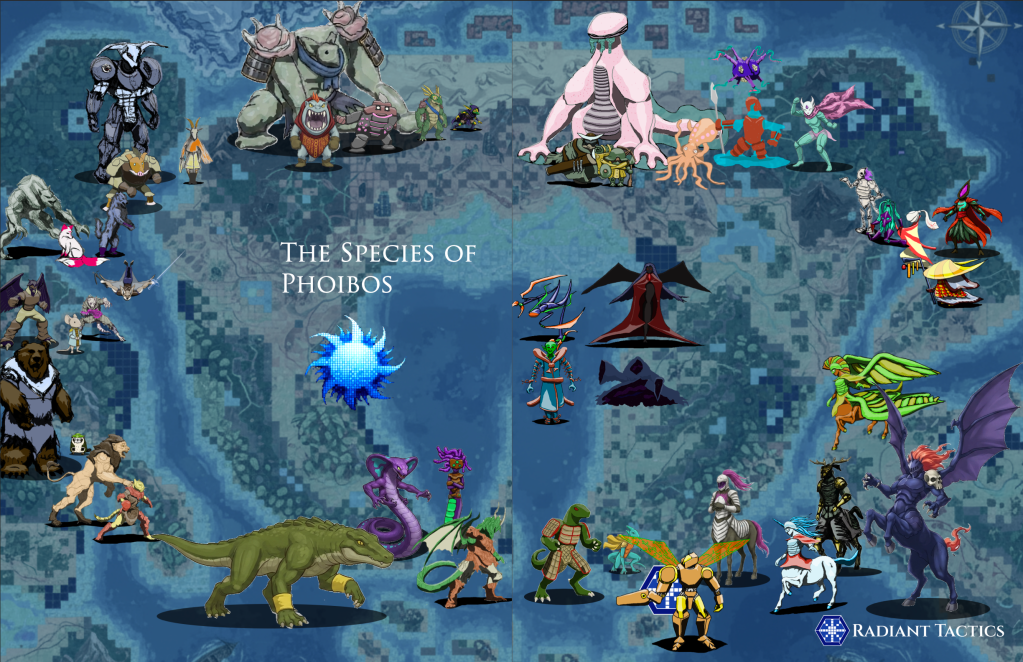
And then there’s a species presentation, using a map of Phoibos to show the different playable species and where they fit into the world. It’s another way of connecting the question of what you can play to the larger setting.
There are several different approaches here, and I’d be interested to hear which ones actually work for people. Which layouts make you want to play a particular character? Which make the world feel interesting and worth exploring? Do you prefer the larger environmental spreads, the compact character grids, the equipment presentations, or the world-map approach?
I’m trying to find ways to make browsing the possibilities an enjoyable experience in its own right.
2. Faction Heraldry: Making Phoibos Feel Like a Coherent World
Some months ago, I spent quite a bit of time standardizing the color schemes for the different factions and major entities in Phoibos. There are a lot of them! We’ve got the various gods and major powers, alongside all the larger political, military, and other organizations.
This month, I’ve been doing more work applying those color schemes across the artwork. And it’s been really satisfying to see what a difference that makes!
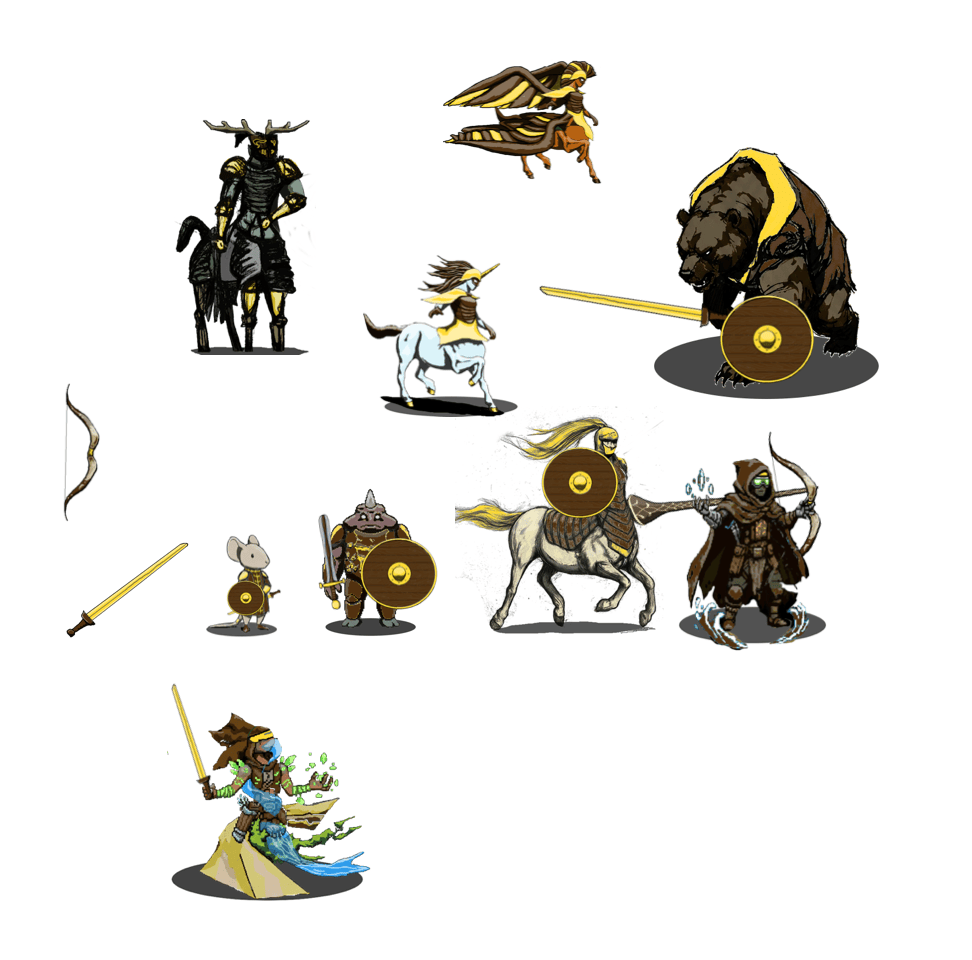
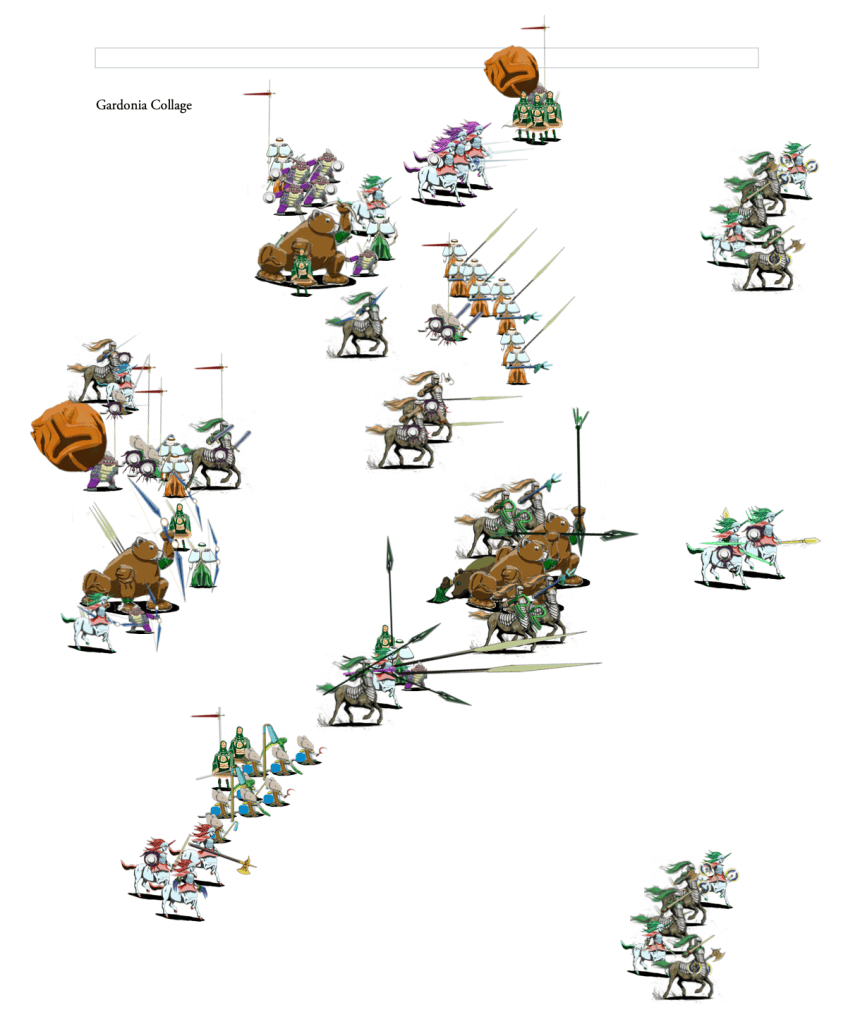
One of the things I particularly like about the new artwork is how visually cohesive the different units within a faction now feel. Take the Guardians, for example. There’s still room for variation in how prominently individual units use browns and golds, but the overall effect is that they look like parts of the same force.
Comparing this with some of the earliest work on the faction makes the difference particularly noticeable. Some of that earlier artwork, including the Guardian Centaur cavalry, was great for getting a visual direction established and giving us something to work with. But it didn’t yet have the same attention to a unified color scheme.
Now, when you see several different units together, there’s a much stronger sense that they belong to the same organization. It’s a relatively simple design decision, but it makes a surprisingly big difference.
Taking the heraldry beyond individual units
I’ve also been extending these color schemes to vehicles and other assets. The vehicle systems themselves are still pretty deep in development, so I’m not quite ready to share too much about that side of things. But I do have some artwork worth showing.
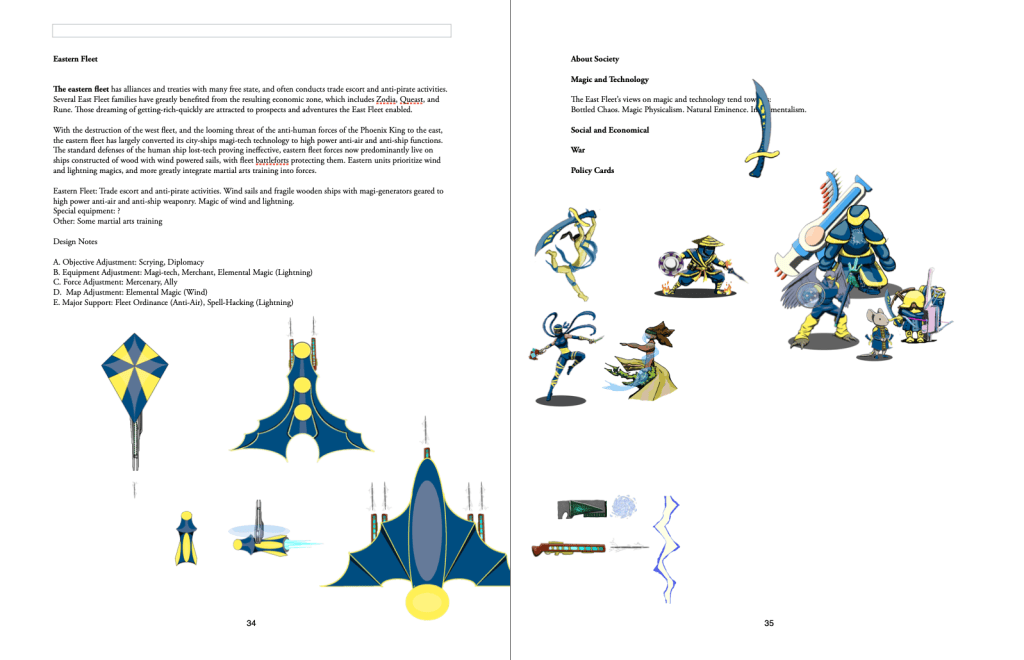
One example is the East Fleet. You can see some of its signature vehicles and lost-tech weaponry alongside examples of its organizational units, all using the faction’s visual identity.
Something I’ve particularly wanted to accomplish is showing how the major factions contain all these smaller organizations, each with its own character and purpose.
The East Fleet, for example, has its Marines, Inspectors, and sanctioned Corsairs. They’re all part of the same larger organization, but they’re not interchangeable. They have different roles and identities, and I’d like that to come through visually.
There’s a nice opportunity here to help people discover the setting. You might see a particular group of units and think, Oh, those are the Corsairs. That’s interesting. What are they about?
It’s similar to the character-inspiration work above, but now we’re using a more standardized visual language to make the world itself feel like a place worth adventuring in.
Gods, major entities, and their followers
Some of this work has also dovetailed with developing the gods and other major entities of Phoibos.
I’ve been bringing together their icons, associated color schemes, and descriptions, along with some artwork showing what their units and adherents might look like.
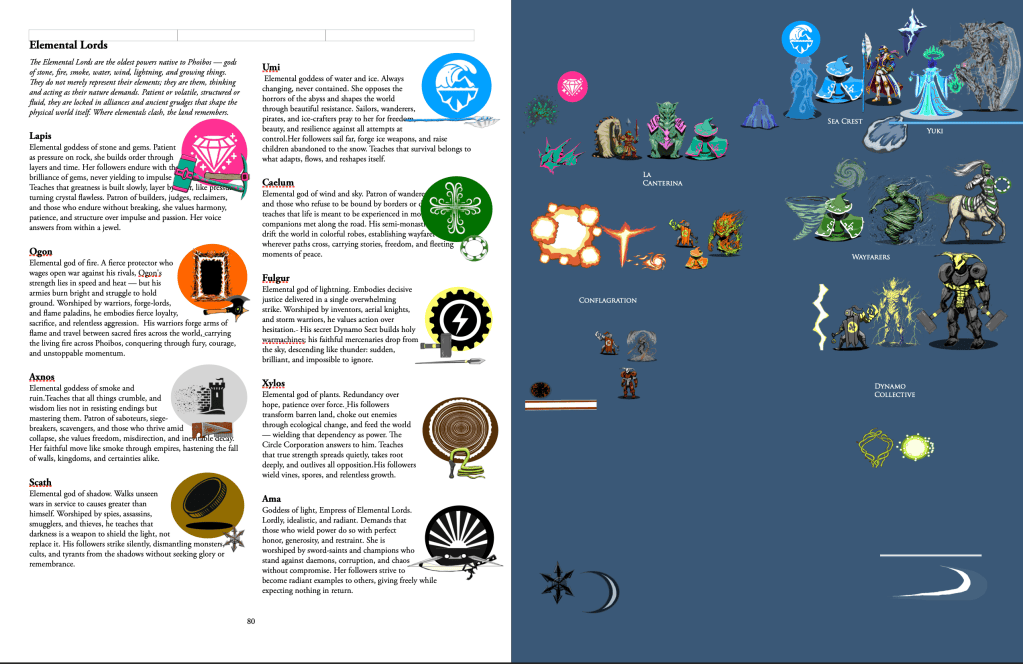
There’s a bit of inspiration here from D&D 3rd Edition and some of the early Forgotten Realms material. I particularly like the way those sources could introduce a god with a relatively short description and a handful of associated details. You’d get a strong sense of what the deity was about without having every aspect of their place in the setting explained to you.
That’s the approach I’m taking here: a short description that gets to the core of what a god represents, with plenty of room to unpack the implications through the setting itself.
For people who enjoy the intrigue around gods, religions, and competing powers in fantasy settings, this should provide another interesting entry point into the lore. It also connects the more abstract idea of a god to something tangible: what would an actual adherent of this power look like in the world?
Turning those identities into playable characters
This work connects directly back to the character-inspiration project.
For each of the major entities and their associated factions, I’ve been thinking about what a particularly good starting character might look like.
Suppose you encounter Fulgor and the Inventors and think: Okay, I love this. I want to be a lightning-worshipping inventor.
What can you actually play?
The goal is to have a character ready to go: something that gives you a concrete way to step into that part of the setting.
Depending on how you think about Radiant, this might be a Magic: The Gathering-style card, a model in a Warhammer 40K-style wargame, or a character class in a D&D-style adventure.
You could think of some of these as a little like prestige classes. They’re more closely tied to the setting and its particular organizations and powers than the generic archetypes.
But the important thing is that they’re playable across the different formats Radiant supports. Whatever aspect of the setting catches your imagination, there should be a way play it, a way to center the stories you create through games in it.
3. Expanding the Strategic Layer: A Little Ogre Battle, A Little Heroes of Might and Magic
Some of the games that have most inspired my thinking about Radiant are Ogre Battle (both the SNES and Nintendo 64 versions) and the Heroes of Might and Magic series.
What I particularly enjoy about these games is the combination of a larger strategic map and smaller tactical encounters. You move squads or armies around an overworld, position your forces, control territory, and eventually get drawn into smaller battles.
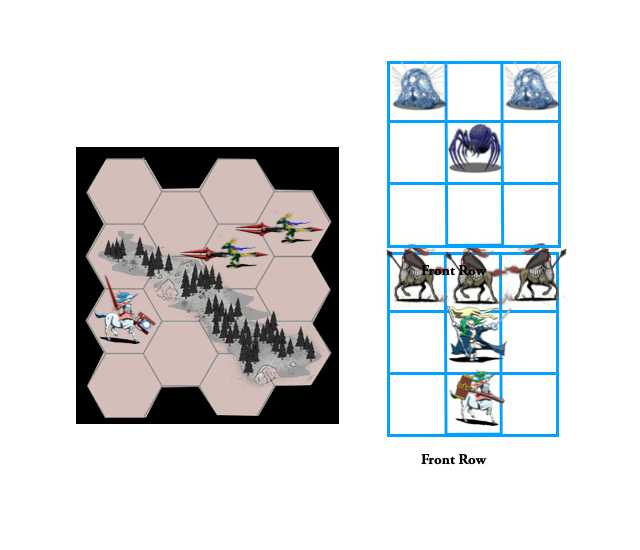
Both also feature heroes moving around the map, where positioning and control can create some really interesting tactical situations.
This is a scale of play we’ve always wanted Radiant to support, even if it hasn’t been our primary development focus.
Recently, though, I played a game that got me thinking about this again: Yggdra Union.
One particularly interesting innovation was its use of tactics cards. These are cards you use to plan and execute attacks based on the positioning of your characters on the larger strategic map.
What I found especially neat was how the cards could bring multiple characters into a single encounter. Depending on where everyone was positioned and who acted first, you could produce a whole range of outcomes when two groups met.
That was something of a lightbulb moment for me.
Previously, I’d been thinking about strategic-scale encounters as relatively one-on-one affairs. Those can take a while to resolve, and they don’t necessarily produce the kind of big, decisive moments that make a strategic map exciting.
The tactics-card approach suggested a different possibility.
Making tactics cards a scarce strategic resource
What if players used their tactics cards at the strategic level to coordinate larger formation-based attacks?
The idea is that these cards would be a finite, relatively scarce resource. You’d have to think carefully about when and where to use them.
Positioning your forces would become particularly important because you’re trying to create opportunities to play those powerful cards. If your opponent doesn’t have the right response—or chooses not to spend one—you might be able to make a decisive play that changes the strategic situation entirely.
That creates an interesting relationship between movement, positioning, and resource management, because you’re maneuvering to create the conditions for a really effective attack.
Connecting multiple small battles
There’s another benefit to this approach.
Some of the demos we’ve shared feature our little 9-by-9 micro-battles. These are the smallest tactical encounters in Radiant, and they’re designed to resolve relatively quickly.
The strategic layer gives us an opportunity to connect several of these encounters together. Rather than resolving one long, complicated battle, you could have a series of smaller engagements that play out as part of one larger strategic confrontation.
This could produce some very interesting linked encounters, especially when the strategic situation calls for a decisive battle.
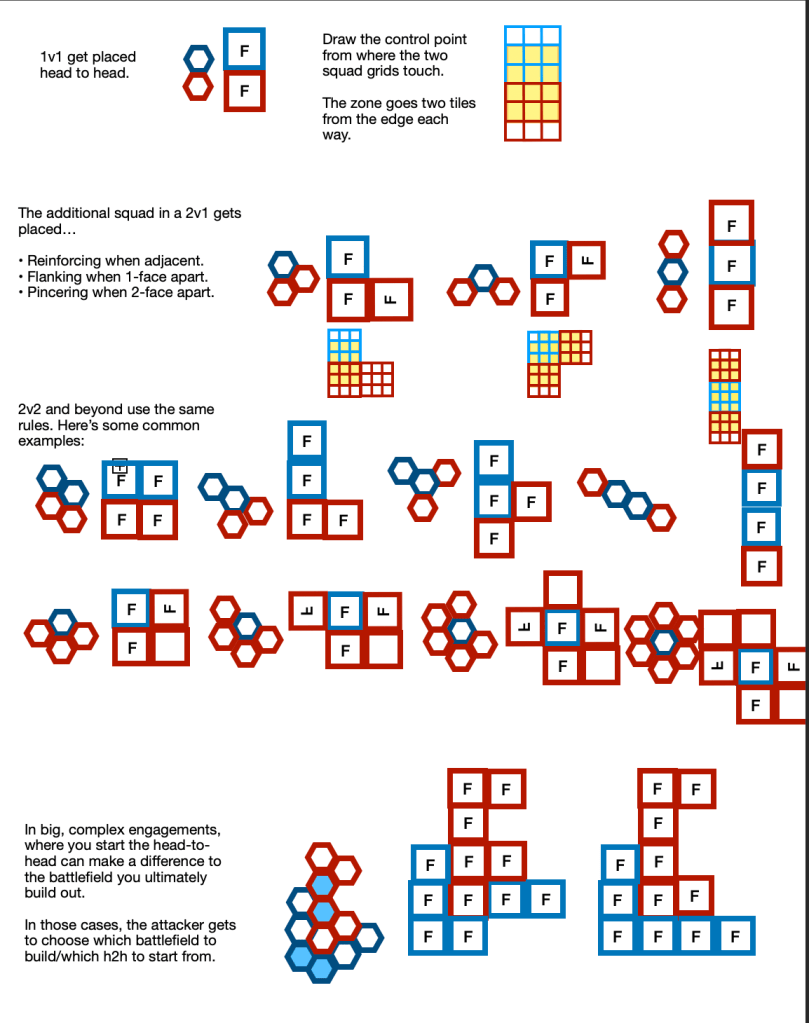
We’ve also been working on some new map artwork to make the grids feel more connected to the terrain and world you’re fighting over. Alongside that, there are some developing rules and visual aids for how these encounters link together and how you arrange them.
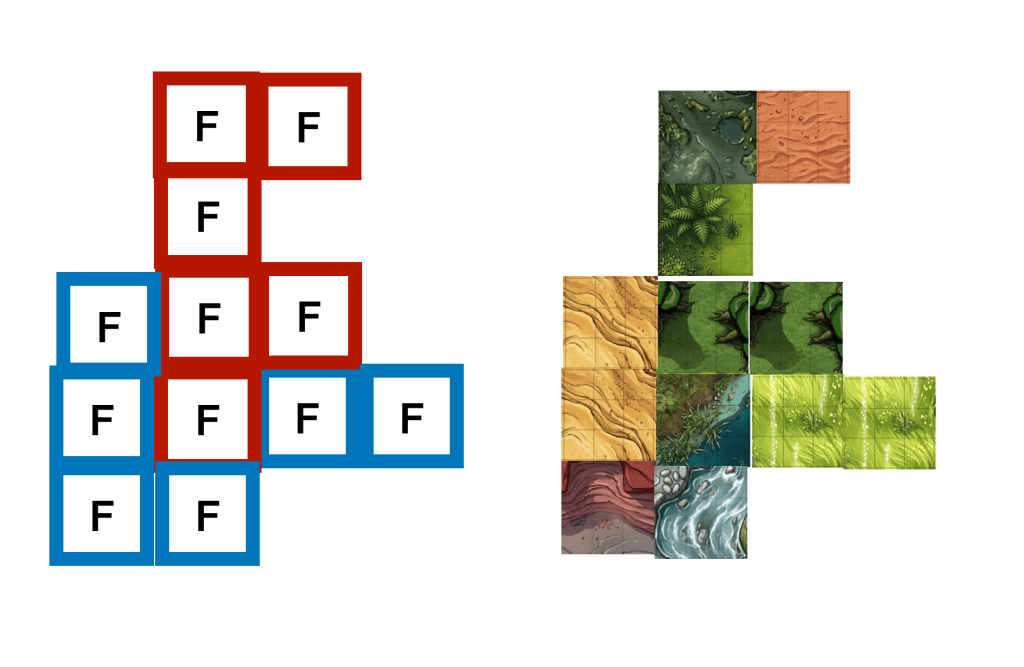
The goal is to make the whole thing intuitive and playable, rather than requiring some sort of rocket science degree to figure out how the battles connect.
4. The Multi-Mode Starter Experience
There’s one other piece of development that ties together a lot of what I’ve been discussing.
One of the demos we’ve wanted to build is something along the lines of a Magic: The Gathering starter kit: a relatively small box, perhaps something comparable to a two-player deck box, that gives you a surprisingly broad range of ways to play.
This has been on the back burner somewhat, as we’ve been balancing Radiant development against more commercial work and my gamification and incentive-design consulting. But it’s still an important part of where we want to take the project.
A small box with a lot of ways to play
Imagine picking up a small starter set and being able to play several quite different games with the same collection of cards and models.
Some of the modes we’re considering include:
- Duels: Competitive, two-player encounters where you build forces using a points-based system and see how they perform against one another.
- Cooperative dungeon exploration: A small group of players working together to explore, fight enemies, and overcome challenges.
- Strategic free-for-all: A larger map where players maneuver forces, hold territory, manage a bit of an economy, and compete for control.
- Adventure mode: A more D&D-like experience, where a small party explores a forest, fights bosses, and works through quest loops.
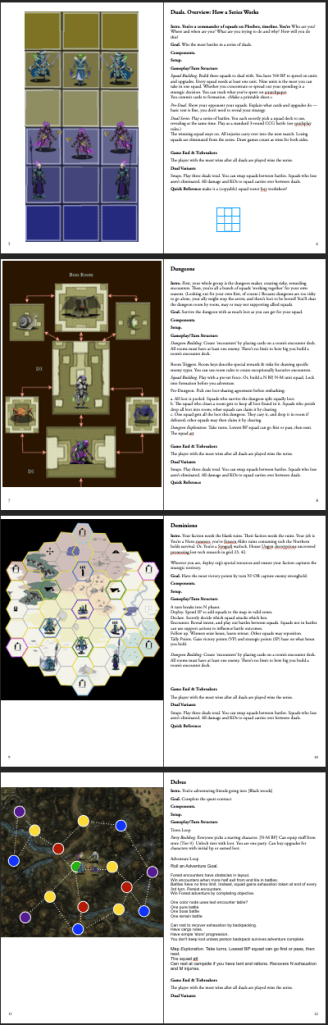
These are different experiences, but they draw on the same underlying collection of characters and assets.
Making your characters useful across game modes
This is where the earlier character-inspiration work becomes particularly important.
We’ve been talking about helping people discover characters they want to play, whether that’s a particular class, faction, or character identity. But we also want those characters to have value beyond a single game mode.
The character cards representing the people you’re elevating into story characters should be useful across all these different experiences.
If your friends prefer cooperative adventure games, you can play with them. If another group prefers competitive duels, you can take those characters into that environment. If you’re interested in strategic map play, those same characters can participate there, too.
That’s a pretty unusual design ambition. Outside of Radiant, people generally aren’t designing their characters and game components to have this sort of utility across such different formats.
And I think that’s one of the distinctive things we’re building.
5. A Creative Project That Will Take as Long as It Takes
I do want to be realistic about the development timeline. This is a creative passion project, and building a system with this much flexibility is a substantial undertaking.
My consulting business have to take priority at times, which means some of these demos and systems take longer to develop than we’d ideally like.
But I’m committed to building this vision; it’s whether the path ends up longer or shorter that’s open.
The ability to take a collection of characters and use them in a variety of genuinely different game experiences is a big part of what makes Radiant exciting to us. It’s also why the visual work, the world-building, and the underlying game systems are so closely connected.
I want people to be able to find something in Phoibos that catches their imagination, pick up a character they think is cool, and then discover that there’s a whole range of ways to play with that character and the world around them.
That’s the sort of system I’m trying to build. It will take time, but this is my passion project, and I’m committed to seeing where I can take it!
Thanks for following Radiant Tactics! Encouragement, sharing the project, and other support is much appreciated.

