Craft your own legends. Create stories together, and carry them forward across every way you play.
That’s the goal we’re building toward with Radiant: tools that help groups author their own stories, continue them across different game experiences, and keep adventures moving even when who can make game night changes week to week.
Here’s some work-in-progress on setting resources groups can use for default conflicts, places, and worldbuilding in Phoibos.
(And of course, inspired groups are always free to fork their own versions.)
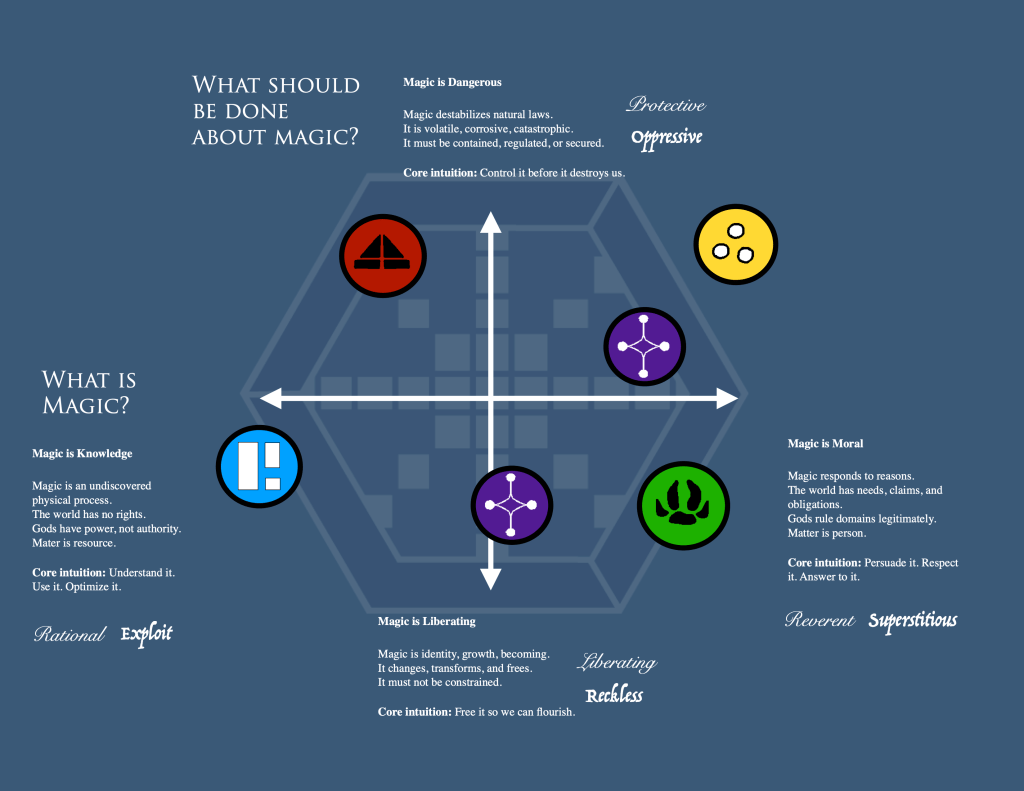
Magic Politics
Phoibos’ defining political question is simple and explosive:
What is magic, and what should be done about it?
Across the world, factions disagree about the risks, responsibilities, and moral obligations surrounding magic.
Supporters praise those aligned with their view, while critics condemn those who oppose it.
This chart shows where the major factions tend to fall.
But like any real society, disagreements and fringe positions exist within factions too.
Charts like this help groups imagine the political tensions and alliances shaping Phoibos — the pressures and conflicts that spark the dramatic questions your stories explore.
Magic Theories
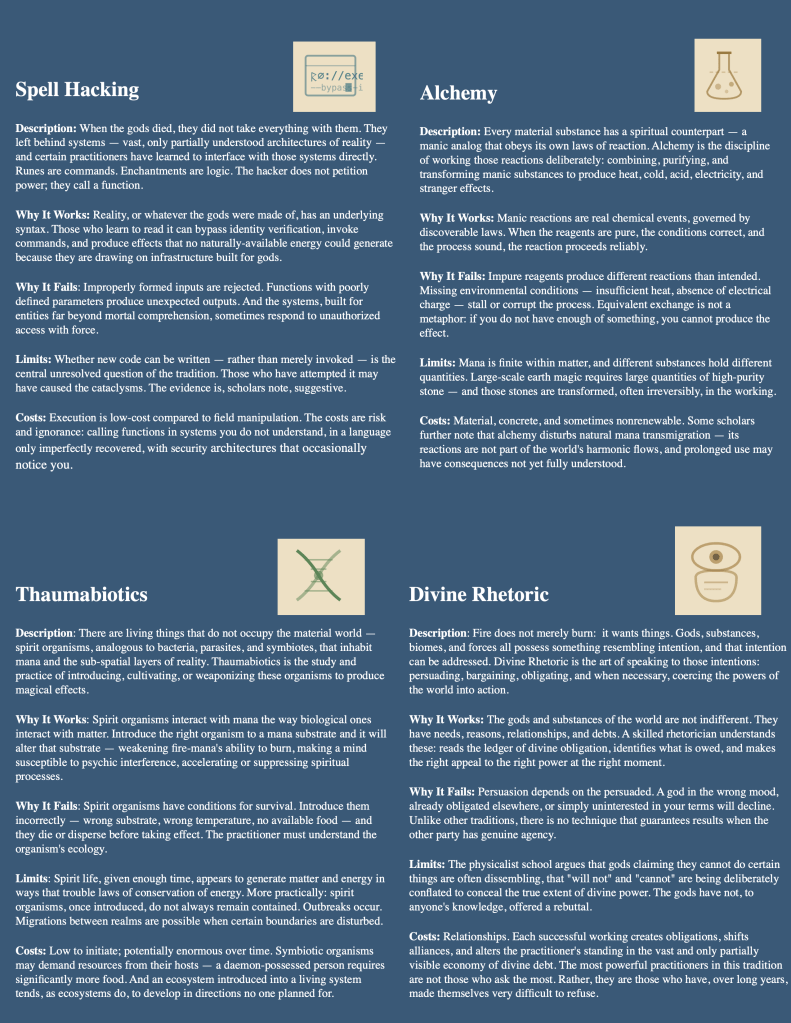
If the politics of magic are contentious, the theories of magic are even more so.
Scholars might prefer a calm exchange of ideas about how magic works. Instead, those theories have become politically charged, tied to ideology, identity, and power.
Here’s an early prototype of Magic Theory cards.
They show how beliefs about the nature of magic influence the techniques used to practice it and predict its outcomes.
(Layout and design will get a polish pass later.)
Resources like this help groups imagine characters more deeply. The spellhacker you meet might see magic one way. The zealot opposing them might see it another.
And those differences can drive powerful story conflicts.
Deus Machina Society
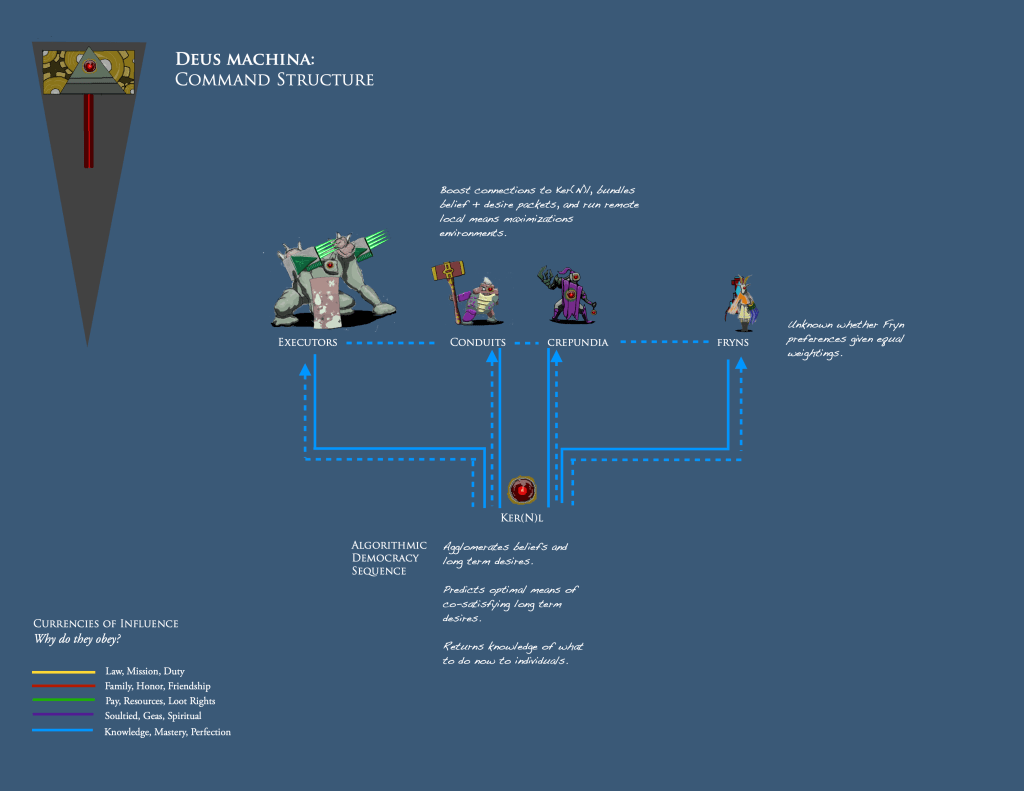
Why do people follow orders?
Who shapes what a society believes — and how decisions are made?
Command-structure diagrams help answer those questions while revealing what life in that place feels like.
In Deus Machina, democracy is “enhanced” by AI.
The people’s will is aggregated, interpreted, and executed by a divine computational system.
Diagramming the faction revealed something striking: a powerful knowledge monoculture.
Beliefs about what should be are fed into the system.
Decisions about what must be done now come out.
Is this a society finally realizing democratic ideals?
Or has something subtly gone wrong?
Society maps like this help groups imagine the internal politics, power struggles, and intrigue awaiting them in Phoibos.
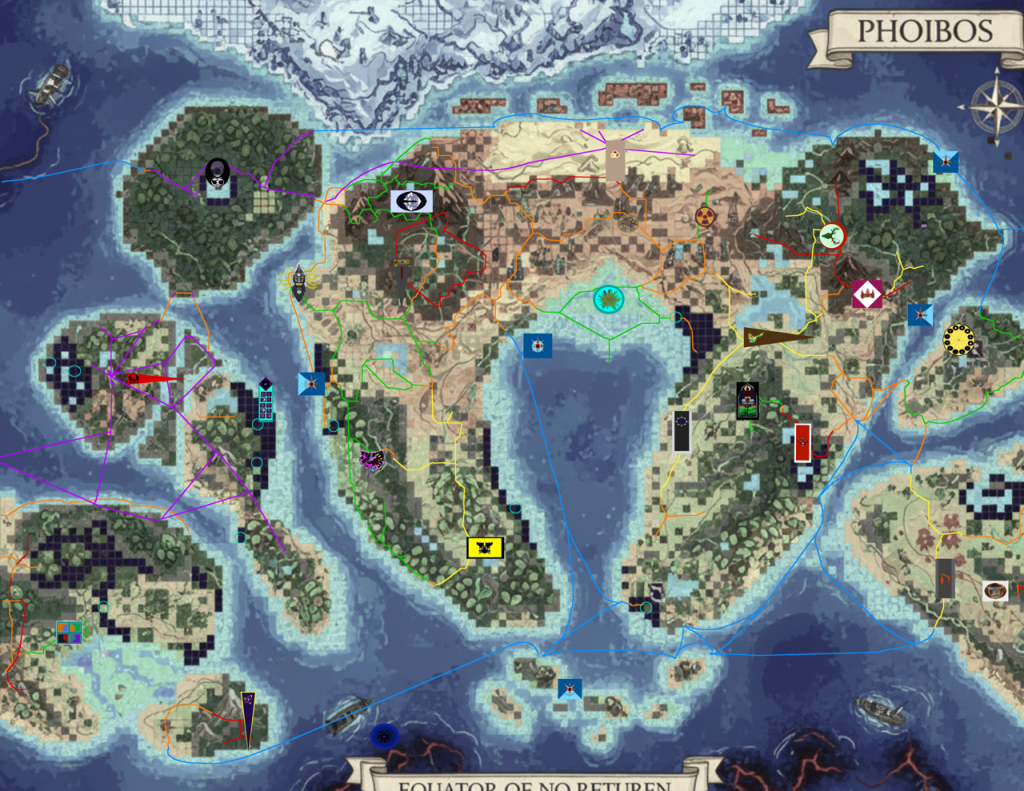
Trade Map
Who trades with whom?
Whose lands must you cross to make your fortune?
Trade networks create natural opportunities for adventure:
grand caravans crossing dangerous lands, smuggling rare goods across borders, or discovering “detours” far from the official routes.
Maps like this help groups imagine travel, exploration, and frontier stories across Phoibos.
Where there is trade, there is conflict.
Where there is conflict, there are stories waiting to be told.
That’s it for this week! Please let us know what you’re most excited about. Or, if you like what we’re building towards, share with others who might be intrested.
 RADIANT TACTICS