Origins of the Necrotic
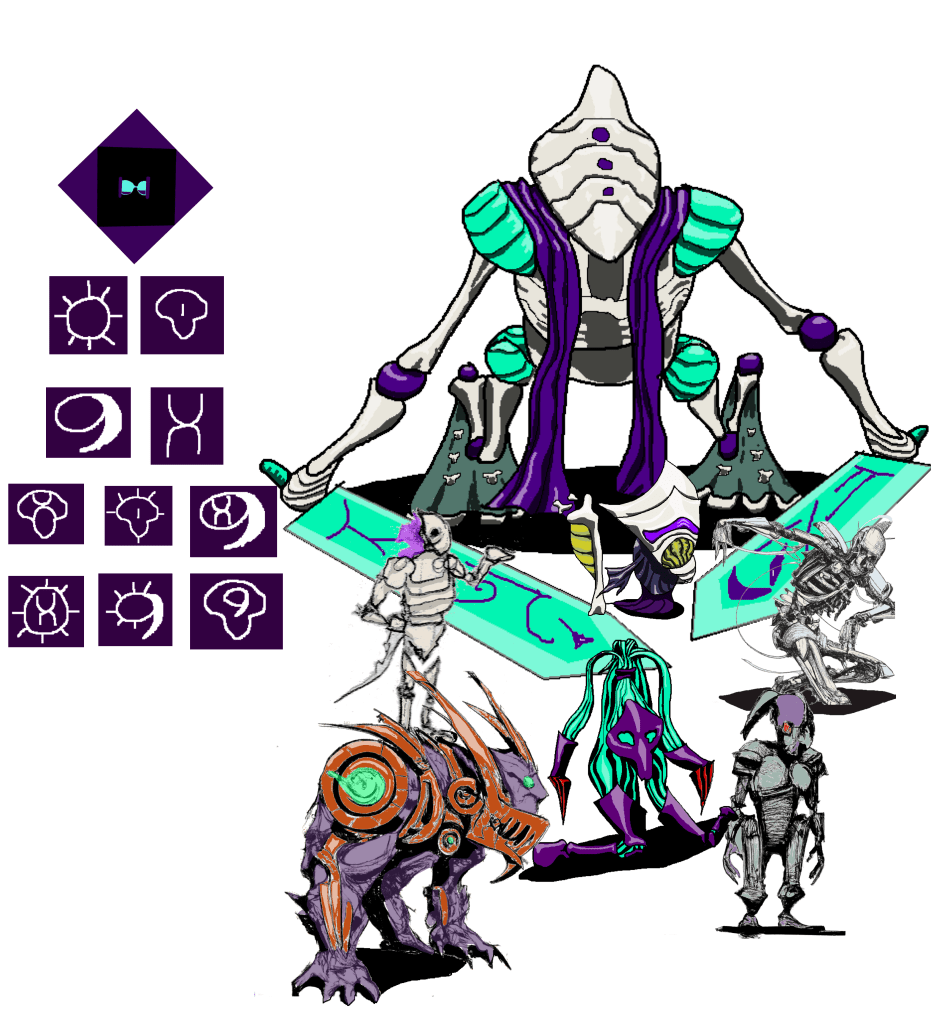
In an ancient schism, whose political pains are still felt fresh among the long-lived fay, Lunasa, living divine and eldest daughter of the god-emperor, renounced the Fay Gods. Thus did the Necrotic fay emerge.
Proclaiming magic a natural phenomenon, Lunasa founded a secular society unified by a singular scientific pursuit. Divine lineage no longer served as a hierarchy structuring society. Rather, the open, meritocratic pursuit of ‘true’ immortality served so.
Major houses emerged, organized by research programs: necromancy, robotics, and psionics. Resources were directed to the most promising and groundbreaking developments, with resultant life-enhancing magi-technologies shared among the Necrotic Fay. House adoption and promotion of promising researchers, marriages for sake of research partnerships, and the hyper-competitive education of the young became common practices.
Yet, this golden age came to an early end. Lunasa, on a political mission to negotiate peace among warring civilizations, was assassinated, a short time before the ancient’s void destructive wars of deicide. Though immune to true-death, her phylum was never recovered. While still united in pursuit of immortality, politics among the major Necrotic houses now threatens to shatter this fledgling society.
Necrotic Society and Institutes
Necrotic society exhibits tensions between Lunasa’s original vision and the undersides in competition among ‘great research houses.’ Lunasa championed an open, shared, public research economy, intended to accelerate the Necrotic’s rate of progress towards true Immortality. Breakthroughs of public research were to be distributed widely and equitably. No house was to stifle innovation through the hoarding and privatization of research or its products. ‘True immortality’ is a right for all. This northstar directive pointed to a society where there were to be no monopolies, no king-makers, no deprived, when it came to true immortality.
The Necrotic’s great houses walk a line between publicly adhering to Lunasa’s vision, and privately securing every advantage they can for their research line. Categorization of research and technologies as ‘critical to true immortality’ is a major political issue. On the one hand, critical research tasks receive the majority share of pooled resources. On the other hand, critical research is made open access — otherwise ‘secret’ findings, techniques, and methods are shared with competitors. The dynamic has led to rival Houses arguing the case for a tech’s ‘centrality’, while discovering House argues for it being non-essential.
Institutes
- Great Houses. House banners display the ‘evolution’ of its research, the products, methods, and breakthroughs a House claims credit for. Shared resources for non-critical research are redistributed based on house accomplishment, measured ‘objectively’ by general adoption of a House’s technologies.
Pragmatisms governs House relations. Any fay adopted or marrying into an existing house takes on its last name. Houses prefer to gain families whose potential as researchers, engineers, or resource acquisitions support its line of research. Political formation of new houses is rare, requiring proposal and defense of a new true immortality line of inquiry. - Threnod. Necrotic childcare was transformed by the invention of Homunculus, disposable remote-connectable bodies. Homunculi allow Necrotic adolescents to safely explore the world. Other societies are not so enthusiastic, registering formal complaints about ‘violent delinquent gangs’ of Necrotic youths who treat faction borders as their personal playgrounds. These Threnod, Necrotic reply, are just a phase —simply immature artists, singers, weapon dancers eager to experience all the world has.
- Caeda. The Caeda are houseless Necrotic who subsist by robbing graveyards for corpses, or plunder ruins for other faction’s useful tech, selling materials back to the research houses.
- Syngrafi. Ambitious houseless mercenary-sorcerers, the Syngrafi gain employment with house security and black ops as mid-level commanders. Syngrafi are expected to raise their own troops, through their contracts with willing daemon, maiorum, or elemental lords.
- Phyn Rynai. When Lunasa was assassinated in events leading up to the apoc, the royal guard, Phyn Rynai, became disgraced and purposeless. The Phy Rynai has evolved into a House agnostic phylactery recovery service, retrieving the politically important, who inconveniently become trapped in their phylactery upon false death. It’s rumored that the Phyn Rynai still seek the Lady of Eternal Dream’s lost phylactery, the orgs true redemptive quest to retrieve financed by their recovery services.
The Major Houses

House Morda
The Phylactery, a technology whereby ‘mind’ or ‘soul’ of the attuned Fay may be preserved on ‘false death’ in an adamant amethyst memory-circuit, was lauded as the new Necrotic society’s first-step towards true immorality. With the invention, Morda became the first Necrotic Great House. Yet, Morda’s greatness waned. Morda’s lead researcher, name now stricken from records, strived to innovate. The ‘dark phyl’, a classified technology deemed by Lunasa to be a ‘perversion of the Necrotic vision’, was said to be too extreme to continue development. Insistent, persisting despite warnings, Morda’s lead researcher rebelled and was ultimately expelled from Necrotic society, Whispers and black bedtime stories suggest the research continues somewhere secretly, post-apoc stats and whereabouts unknown.
While House Morda still produces the most adopted, most depended on Necrotic technology, the phylactery, current mood is of a House in decline, a House whose leaders fall short of founders. Other Houses tend to view Morda as meddling bureaucrats, leaning on past reputation to influence policy making, without contributing much new to the Necrotic’s research directive.

House Michani
Rival Houses Malak, Morda, and Melia have accused Michani of being a poser, its views on mental imprint to machines and superiority of mechanical more a cover to obtain public funding for the looting of weapons of war.
Living systems are mana systems.
Michani Haiku, Southern Fleet Translation
Mana systems are mechanical systems.
The Mechanical perfects biological.
The reputation may be deserved, as House Michani sponsors expeditions to recover mechanical lost-tech from other ancient civilization sites, leading to animosity and conflict between former owners and the Necrotic. Yet, adoption of Michani vehicles and war-walkers remains high, and the Michani House maintains an iron grip in its standing through its role in maintaining Necrotic stable teleportation circles.
Necrotic cities heavily rely on stable teleportation technologies as their primary mode of transportation between cities. There are no maintained roads to and from Necrotic city centers, and that travel times are not a consideration in placement of research strongholds. While the invention of massive, facility bound teleportation technologies pre-dated Necrotic formation — fragments suggest the Auos covenants possessed similar ‘arches’ — Michani has the best runic-circuitry engineers, needed to maintain pads, correct logics, and prevent accidents.
Other Fay societies avoid teleportation. The Auos condemn the magic’s used as ‘perversive’ and ‘corruptive’, while even the Exile consider them ‘harmful’. There’s some evidence that frequent usage contributes to the Necrotic’s frailer physiques. Through Michani, the Necrotic knowledge of circle teleportation techniques surpasses other factions, to the point where they can disable and activate closely imitating technologies — a central Fleet research lab was believed seized and razed by a Necrotic strike force appearing within its own assumed closed system.

House Melius
Melius’ genetic researchers were responsible for the Homunculus breakthrough. The widespread availability of artificial bodies changed Necrotic’s approach to childcare, to security forces, and to more permissive public teleportation. Melius is the first to pilot new Homunculi centered services, and maintains an unparalleled security force that stands by to ‘pilot’ site Homunculi used for research and production defenses.
Recently, there was a shortage in Homunculi, due to Abyssal invasion and occupation of Gryzal, near Melius’ research stronghold and production center of Miun. Miun’s Homunculi production was re-geared towards war efforts. The Homunculi spearheaded defense of Gryzal demonstrated that, with Homunculi, the Necrotic’s small, slowly reproducing population could maintain the numbers to oppose a larger force. While normal Homunculi production resumed when Zaon reached a co-ruling agreement with Cycalia tyrants, concerns about the fragility of the Necrotic’s Homunculi supply remained.

House Malak
Malak argues true immortality consists in eternal persistence of mind. The body, be it mechanical or biological, is merely a necessary but insufficient condition for true immortality. Malak pioneers mind-transfer techniques, with agents who shed bodies like clothes. Other Houses adopt Malak techniques to facilitate imprinting minds in machines, attuning souls to phylactery, or seeding conscious in undead flesh.
Malak’s research into the mental includes comparative psionics — to secure volunteers, the House maintains greater diplomatic relations with other factions. Malak’s research HQs in Mu housed a joint research program with the Western Fleet. Post Auos aggresion, Mu’ docks remain intact, yet port is inoperable from sunken city-ships. Yet, relations remain in form of ‘Deathward program’, a successor to that joint research project. Malak’s protection of the Human refugees draws ire of Auos, yet is seen in Necrotic circles as a model for countering the Auos proxy armies of Were vassals. Fay against Fay bodily violence remains unthinkable, a line neither Auos nor Necrotic will cross.
Minor Major Houses
“With all due respect, you’re making a mistake. The ‘Minor’ houses are so-called due to derivative research initiatives, and not because they lack the size, resources, or standing of the major. Divide et impera is not applicable to Necrotic houses…”
Remark from a Deathward Lt. to the South Fleet Ambassador

House Hanor
Hanor’s Research Stronghold of Aphyn outdates the surrounding Texulcin and Murdloch regions, its geological position thrusting Hanor into a more active relations with its neighbors than is typical with Necrotic laboratories. To one side, Texulcin’s Nox Templar see Hanor’s undead test products as an abomination, leading to occasional ‘crusade’ against the ‘black fortress’ of Aphyn. To the other, the Shu of Murdloch are frequently beset by disease and pestilence daemons, some embracing and some opposing. Hanor’s cyber-undead, immune to diseases and poisons, have proven a valuable ally among Shu resisting the encroach of pestilence.
While many within Hanor see conflict as disruptive to its research timetable, others have come to see conflicts as valuable opportunities for field testing. Hanor’s cyber-undead line certainly claims greater proven reliability, an innovation and disruption to Morda’s flimsy alternative.
From Methods….
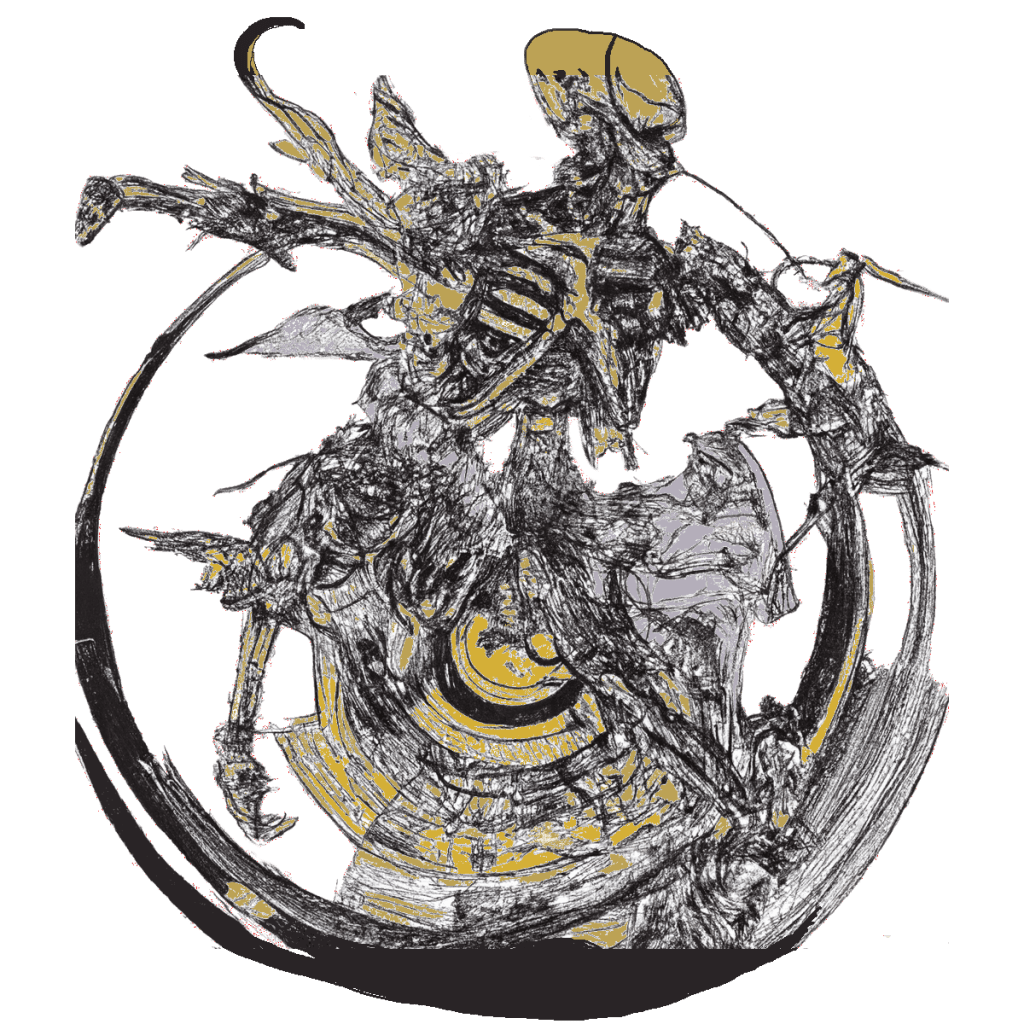
“The technoliche’s mind is backed up and encrypted in memory banks: key desires, values, and skills are no longer losable nor implantable upon pseudo-death.
Unhackable algorithms secure and automate phylum transfer; risk of true-death by user or system error is reduced an additional estimated 0.0065%.”

House Argus
Within its Nyu citadel, Argus captures and dissects synthoid specimens to study their synthetic DNA, attempting to recreate forgotten accomplishments in artificial life and bio-mechanical organisms.
Neighboring Kveen has accused Nyu of creating Homunculi Agents indistinguishable from Were, infiltrating the retinues of ruling Kveen dynasties. Argus denies the accusations, claiming it merely Kveen political cover for the removal of dissenters and concentrating power. Whatever the truth, Argus produces the most advanced Homunculi vessels, the luxury counterparts to Melius’ basic necessity.
“…Argus technology thus enables a moral recovery point.
An agent, induced to violence via bio-chemical and cybernetic means, may, post criminal action, be restored to her pre-criminal personal identity.
“Programmable Intentions”, Argus Research Paper
The differences in memory, goals, values between the two states are designed to make the killer and agent literally different persons. For purposes of justice, the cyber-mind of the culpable can be sentenced and executed, while the valuable talents and conscience of the original segmented and pardoned.”

House Zaon
Individual minds tend, over time, to change and subvert rules to further advance their personal interests at the expense of others. Zaon’s vision is to change such dynamics, with robotics enforcing eternal laws embedded in Necrotic minds.
Rival Houses charge Zaon with profiting from vague and unproven vision. Rhetoric of ‘immutable rule-set for minds’ is entirely vapid, Zaon a public parasite enamoring the ignorant with its largely untested, new and novel theoretical approach to achieving ‘true immortality.’
“Immutable rule-sets coordinating and enforcing activities within and among minds. Dormant consciousness made to work, unlocking full potential. The psionic powers of communities empowered through the law of code.”
Zaon Manifesto
Rival Houses charge Zaon with profiting from vague and unproven vision. Rhetoric of ‘immutable rule-set for minds’ is entirely vapid, Zaon a public parasite enamoring the ignorant with its largely untested, new and novel theoretical approach to achieving ‘true immortality.’
Zaon replies that its theory’s ‘unproven’ status is entirely the consequence of the invasion of Gryzal, where Zaon research labs are headquartered. The public funds for Zaon research had to be redirected to defence — see the Bellum ‘Starfish’, robotic walkers capable of remotely manifesting group channeled psionic powers.
It’s rumored that the peace treaty with Abyssal tyrants is secretly part of Zaon’s research program. Zaon’s cyber-augments actually use portions of an individual’s sub-conscious mental activity as part of a network of distributed mental powers. “Like you’re giving Zaon a backdoor to your mind!”, ‘Zaon can hack a ‘botnet’ for its collective psychic power!”

House Ungyn
Ungyn is infamous for the creation of Vampire, a new species of undead, which demonstrated the viability of its necro-genetic focus. With the Vampire project, Ungyn demonstrated that formerly mortal species of human could artificially be made immortal, of similar footing to the Necrotic Fay’s base state. While not a step in progressing Necrotic fay to true immortality per say, the breakthrough resonated with Lunasa’s vision: the right to true immortality for all could be broadened in scope previously unimaginable!
Ungyn’s rising star status was dashed by a major setback, the loss of its primary ‘Black Woods’ research fortress at the hands of former test-subjects. The House is still recovering from the loss, rebuilding at a former secondary location, Guon tower, on the Noctis Coast.
Rival’s blame Ungyn’s setbacks on a ‘move fast and break things’ management style, public funds from initial breakthroughs poorly re-invested.
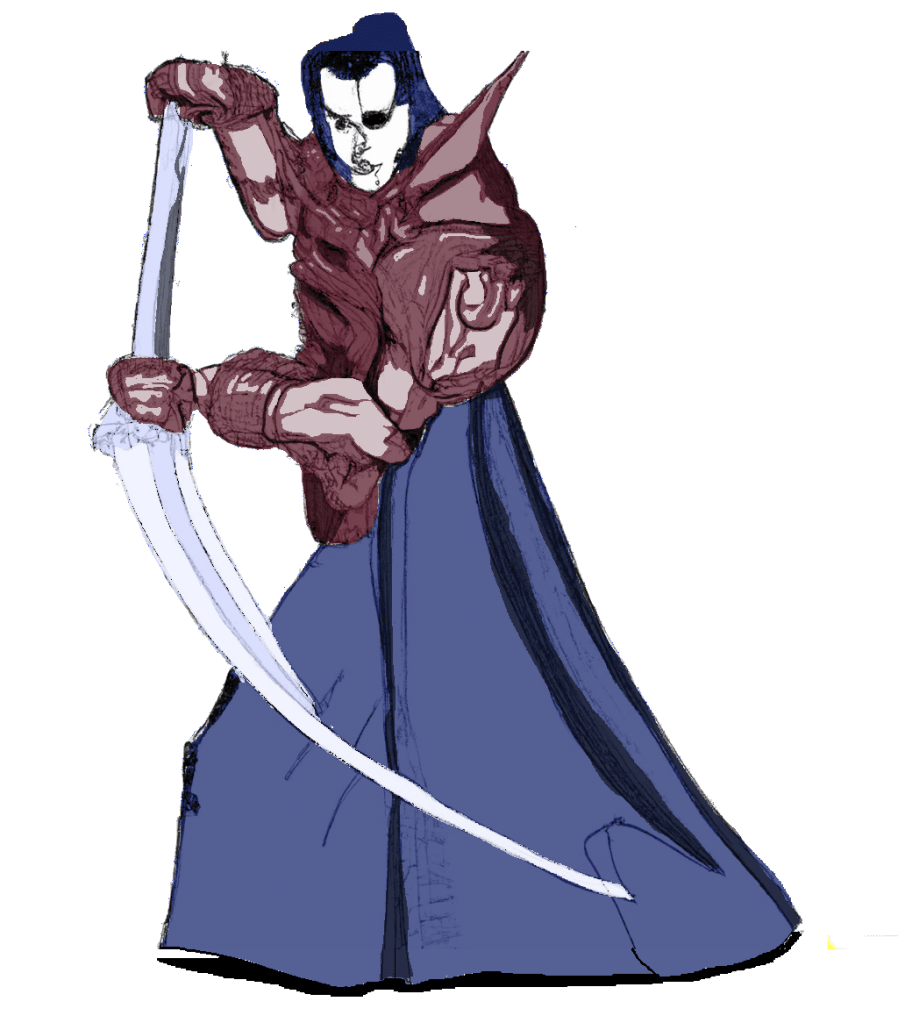
“Major Findings: The Necrotic identity can be extended to non-Fay species.”
The Revolutionary Discoveries of Project Vampyr

House Pomp
Pomp’s research goal is to fully restore the mental powers of dead beings, inventing methods for allowing dead beings beliefs and desires to propagate actions and events in the world. Pomp’s breakthroughs include artificial shades, undead beings that retain a significant portion of living’s mental powers, and possessed, living beings whom through the dead can communicate and act.
Pomp’s conviction and critique have isolated the House. Rival Houses frame Pomp as ideologically dogmatic, lacking the pragmatism other researchers value. Having few allies among the Necrotic has pressured Pomp into seeking allies abroad. The desperate beaching of West Flee City-Ship Endurance offers Pomp an opportunity. Desperate of Auos, Pariah to monsters of jungle, the West Fleet “Doomed” Remnants have reluctantly agreed to possession and wraith research collaborations.
“Our rivals misconceive true immortality, pursue empty goals. Life more reliably sustained, life forever and never death! Our rivals seek to divide life and death, our person forever on one side.
Pomp claims the contrary: True immortality is only possible through unity of life and death, not division. Obliterate the material difference between being dead and being alive, and achieve truly immortal being.”
House Pomp, Research Manifesto.

House Nugon
House Nugon conceives Lunasa’s vision as a project of transcendence, of creating a new form of life. House Nugon explicitly appeals to would-be Aristocrats, with messaging around identifying the best from Necrotic society, isolating the source of capability and potential, then voluntarily combining and artificially propagating that talent to a new generation. Overtly, Nugon leans into such appeal, drawing financial support through its social services. As Rivals portray, Nugon is a voluntary dating platform, trait forecasting, and a la carte marker selecting service, for would-be Necrotic ‘aristocrats’ who flatter themselves as ‘best’ in some capacity. Such rival House sneers points to a deeper problem internal to Nugon research: How is ‘best’ to be decided? By individuals, powerful, self deceiving, and fallible, surrounded by flatters?
In respects, Nugon’s ‘dating app’ is a facade financing its true mission. Covertly, Nugon inner circle seeks proof of ‘latent psionic abilities’ demonstratively manifested by individuals only during moments of genuine duress. Nugon more strongly pursues study of history for leads on individuals, and sponsors expeditions to recover biological materials of individuals, regardless of species, believed to have manifested novel or extremely intense psionic abilities. As many in Nugon are magical physicalists, this includes the biological materials of so called ‘Gods’ and ‘Kami’, as well as Ooze, which some theorists hold are corporeal remnants of dead gods.
Nugon inner circle believe personhood is shared by Fay, Dverg, Human, Were and others alike, irrespective of physique and biologies; there’s a common psychic entity shared. The emergence of a new generation of psychic entities, one with powers resembling greater entities, is the true goal. Nugon is rumored to contain adopted non-Necrotic House researchers, all integrated into its frontier city in Tenebrae.
Conclusion
And that’s it for today! If you liked this post, be sure to check out our World of Phoibos World Building Q&A too. You might also support Radiant through sharing content, signing up for content updates, or materially on Patreon. Happy gaming!
 RADIANT TACTICS